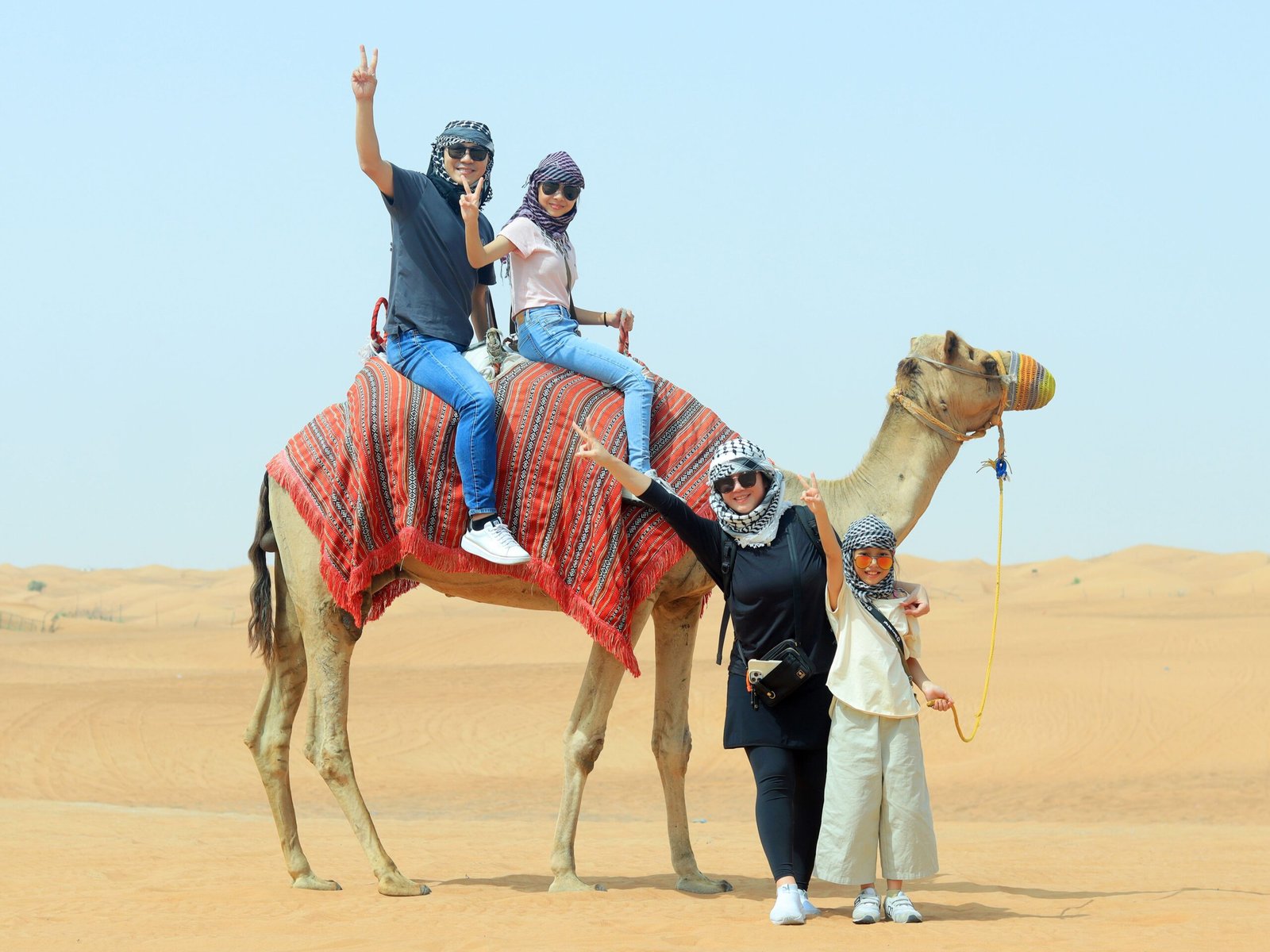
Most people’s “desert safari” in Dubai is the same experience, repeated on a loop: a convoy of twenty identical Land Cruisers, all doing the same dune route at the same time, arriving at the same fixed camp for the same buffet dinner and the same choreographed sunset photo. It’s not a bad experience, exactly. It’s just not really a desert experience — it’s a theme park wearing the desert as a costume.
The version worth chasing is smaller, quieter, and easy to find if you know what to ask for before you book.
The Difference Between a Tourist Safari and a Real One
The mass-market safaris booked through hotel front desks prioritize volume — more vehicles, more guests, more turnover per evening. A smaller operator, booked directly rather than through a hotel concierge, gets you a quieter stretch of the Rub’ al Khali’s edge and a guide who’s actually willing to talk about Bedouin navigation and desert ecology, rather than just gunning the engine for the sake of a good photo.
How to Vet a Desert Safari Operator
- Ask the group size before booking. Anything over 8 vehicles per convoy starts to lose the “wild desert” feeling fast — you’ll spend more time dodging other trucks’ dust trails than actually experiencing the dunes.
- Check whether the camp is a fixed tourist compound or a smaller, semi-private setup. The difference in atmosphere is dramatic — one feels like a stage set, the other feels like an actual camp.
- Look for operators who mention falconry demonstrations with real context, not just a bird placed on your arm for thirty seconds and a photo. The good operators explain the history of falconry in Emirati culture, not just the trick.
- Confirm sandboarding gear is included, not a paid add-on sprung on you once you’re already at camp with no other options.
3 Things to Avoid on a Desert Safari
- Wearing loose sandals for dune bashing. They will not survive the ride, and you’ll spend the rest of the evening barefoot in sand that’s still holding the day’s heat.
- Booking a “sunrise” safari without checking the actual sunrise time seasonally. It shifts by nearly two hours between summer and winter, and a mistimed booking means either a rushed pickup or a long wait in the dark.
- Skipping motion-sickness precautions if you’re prone to it. Dune bashing is intense — closer to off-road rally driving than a scenic drive — and it catches a lot of first-timers off guard.
Best Time to Visit vs. Budget Required
| Experience Level | Best Season | Budget (per person) |
| Standard evening safari | Oct–Apr | AED 150–250 |
| Overnight desert camping | Nov–Mar (cool nights) | AED 400–700 |
| Private/small-group safari | Year-round, avoid Jul–Aug midday | AED 500–900 |
If you can stretch the budget, the private or small-group option is worth it specifically for the quiet — it’s the difference between hearing your own thoughts in the desert and hearing a dozen other vehicles’ engines idling nearby.
From the Field
Midway through a small-operator safari, our Emirati driver did something none of the big-convoy tours I’d read about ever mentioned: he stopped the vehicle on top of a dune, killed the engine, and cut the music. For a few minutes, nobody in the group said anything. There wasn’t another vehicle in sight, no distant hum of other convoys, just wind moving sand in small drifts across the dune’s ridge.
Then he explained, almost casually, that his grandfather used to navigate these same dunes at night using star patterns — long before GPS, long before any of the infrastructure that now makes this desert so easy to access. He wasn’t performing the story for us. He seemed to genuinely want us to sit in silence for a moment before he said anything at all. That pause is the entire difference between a real desert experience and a theme-park version dressed up to look like one.